The AI Framework Behind the Momentry Intelligence Platform
In our last issue, we introduced the Momentry Intelligence Platform, the shared foundation behind Momentry’s solutions. Starting with video and audio, the platform extends these capabilities to documents, images, metadata, and structured data, allowing them to be understood, searched, connected, and used on a common foundation.
But as data sources multiply and questions grow more complex, how does AI find the right information and understand how different pieces of data relate to one another?
The answer lies in the core technology behind the platform: RAPTOR Technology.
RAPTOR: A Shared AI Foundation
RAPTOR is built on a modular, multimodal architecture. It brings data understanding, knowledge retrieval, AI model orchestration, and enterprise system integration together in a single framework, supporting the Momentry Intelligence Platform and a wide range of enterprise AI solutions.
Here’s one way to think about how they relate. The Momentry Intelligence Platform is where enterprises put their data and knowledge to work. RAPTOR is the core AI framework that supports the platform and enables it to expand to new applications. In short, the platform is the part you see and use, and RAPTOR is the engine running behind it.
With this architecture, each application can combine the capabilities it needs, extending from video search to enterprise knowledge Q&A, data analysis, and workflow integration.
Beyond Conventional RAG: Why Finding Relevant Content Isn’t Enough
Many enterprise AI applications today use RAG (Retrieval-Augmented Generation). They first search enterprise data for relevant content, then pass it to a large language model to generate an answer.
But the answers enterprises really need are often scattered across multiple sources.
Say you ask: “Why did this project end up changing its equipment specifications?” The final spec sheet may only record what changed. The reasons may be buried in earlier meeting recordings, test reports, and decision decks. To give a fuller explanation, AI needs to find the relevant material and understand how it relates and in what order the events occurred.
When retrieval relies mainly on semantic similarity between the query and individual passages, it can miss important clues in names, fields, relationships, or timing. That’s why RAPTOR combines multiple retrieval methods, so each question can be answered using the most suitable way of finding knowledge:
Uses semantic understanding to find content with similar concepts and meaning, even when different words are used.
Matches keywords to find content containing specific terms.
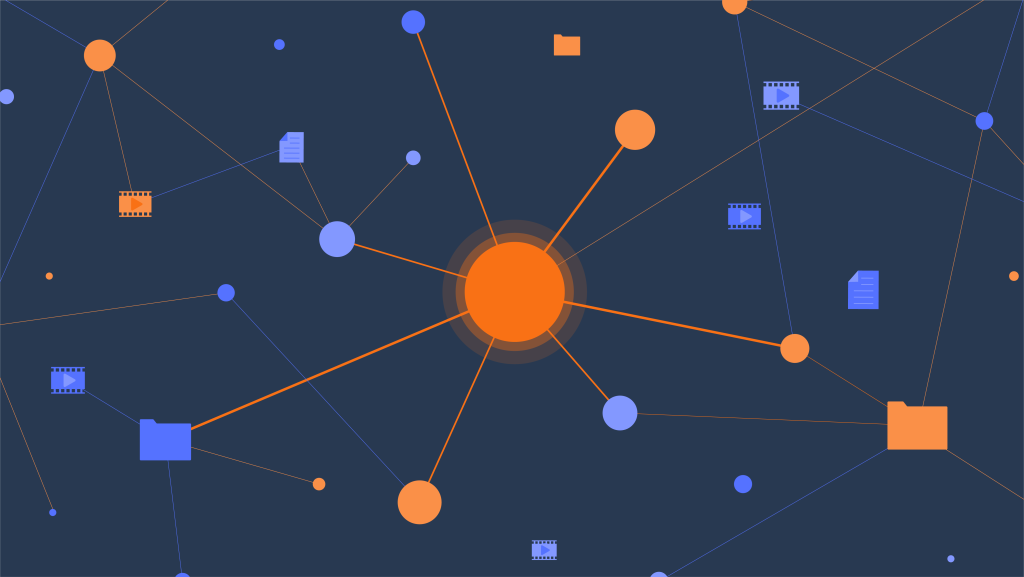
Uses knowledge graphs to connect people, events, documents, organizations, and more, revealing how information is related.
Brings time and event sequence into retrieval, distinguishing information from different periods and tracking how knowledge changes over time.
These retrieval methods complement one another. Depending on the task, RAPTOR can select or combine the most suitable methods to gather information by meaning, keywords, relationships, and time, giving AI models more complete context to work with.
By integrating multiple retrieval capabilities, RAPTOR doesn’t just help AI find relevant content. It also helps information from different sources be better understood and put to use.
Answers You Can Trace Back to the Source
For enterprises, whether an AI answer is useful also depends on whether users can verify where it came from.
Which video is this clip from? Which document is the answer based on? Which meeting is being referenced? When was this information first raised? These questions all affect whether an answer can be relied on in real work.
That’s why RAPTOR’s enterprise knowledge and retrieval architecture supports Grounded Answers, which are answers backed by data. Users can trace answers back to the relevant source material to check the context, verify details, and make informed decisions.
From finding content to understanding and verifying it, source traceability is key to building trust in enterprise AI.
AI Deployment Under Your Control
Beyond understanding and retrieval, adopting AI also means deciding where your data, models, and computing resources should live.
Internal videos, customer information, R&D documents, and operational records often contain sensitive information and valuable intellectual property. Enterprises need to choose a deployment approach that fits their IT architecture, security policies, and management requirements.
The Momentry Intelligence Platform is designed to keep enterprises in control of their data and AI environment. It supports On-Premises, Private Cloud, and Air-Gapped deployments as needed, so both data and models stay within environments the enterprise controls.
As AI becomes part of everyday work, keeping control of your own data and knowledge will be key to building long-term AI capabilities.
One Shared Foundation, Many Enterprise Applications
RAPTOR provides a shared AI foundation for the Momentry Intelligence Platform. It lets enterprises keep adding applications to meet different needs while reducing the burden of redundant development and system integration.
In our next issue, we’ll move from technology to applications. We’ll explore how Momentry addresses industry needs and how Accusys is drawing on more than 30 years of storage expertise to develop more enterprise AI solutions.
See Momentry Studio at Inter BEE 2026
Inter BEE 2026 opens today! After making its debut at COMPUTEX earlier this year, Momentry Studio is now on display at Makuhari Messe in Chiba, Japan. You can find us at the Nextorage / ATOMOS booth.
Video production and broadcast teams generate massive amounts of content every day: raw footage, interviews, program segments, and years of archives. Being able to quickly find the right content when you need it is an important step in keeping your media assets valuable.
At the booth, we’ll give live demos of how Momentry Studio understands the visuals, people, speech, and scenes in your videos, so you can quickly find the clips you need just by describing them in natural language.
If you work in video production, media management, or broadcasting, stop by our booth to try it for yourself. We’d love to hear about your video search and content workflow needs!
- Event: Inter BEE 2026
- Dates: Wednesday, November 18 – Friday, November 20, 2026
- Venue: Makuhari Messe, Chiba, Japan
- Booth: Hall 8, Booth No. 8217 (Nextorage / ATOMOS)
- Exhibit Area: Video Production / Broadcast Equipment
- More Info: Inter BEE 2026 Official Website